 Finance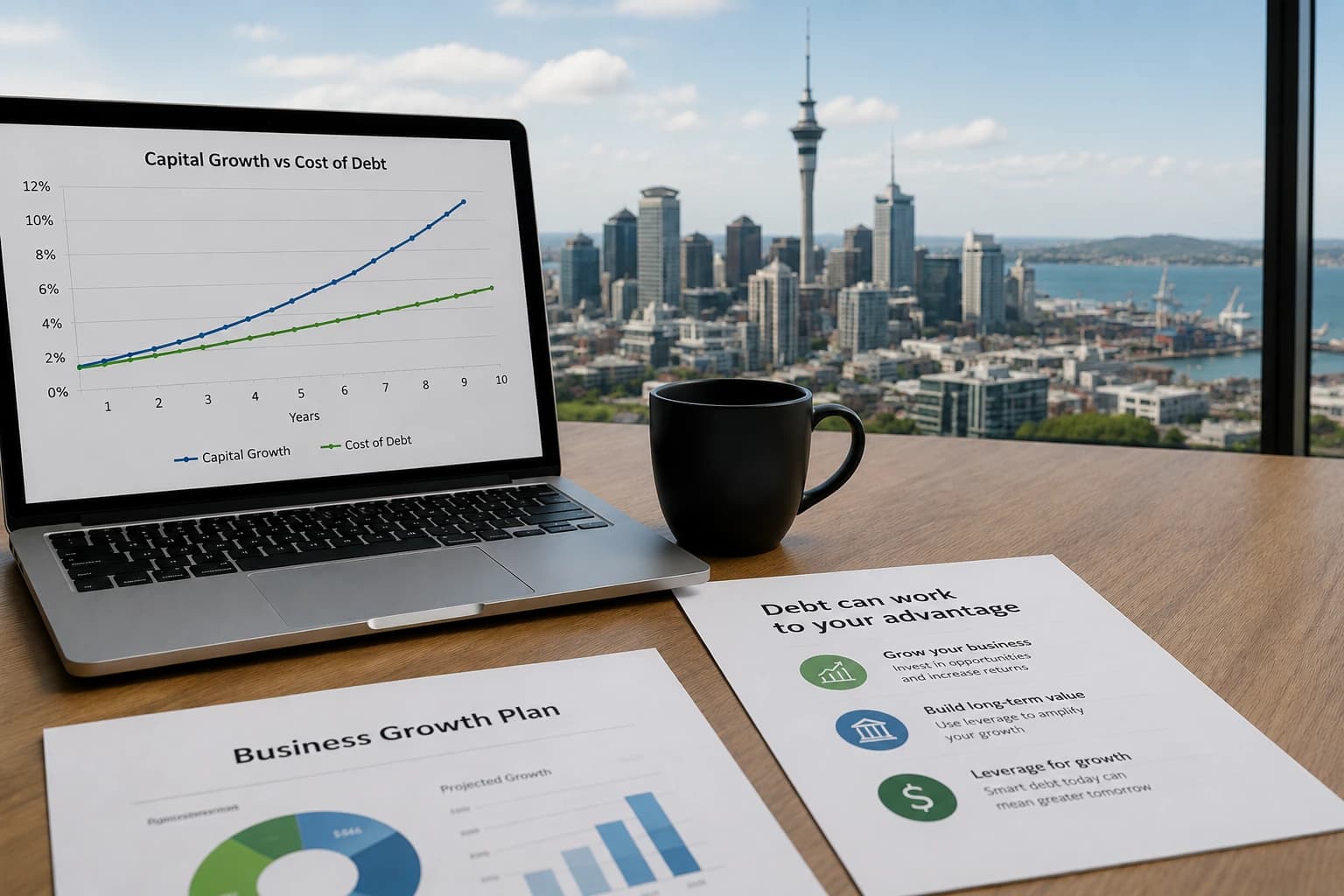
Most business owners have been taught that debt is something to avoid. Pay it off fast, don't borrow unless you have to, keep things simple. It's a reasonable instinct — but when it comes to business assets, it can actually cost you more in the long run.
The businesses that grow fastest aren't usually the ones hoarding cash. They're the ones who understand how to deploy capital strategically — and that means knowing when to use someone else's money instead of your own.
The Opportunity Cost of Paying Cash
When you write a cheque for a $70,000 vehicle, that $70,000 leaves your business permanently. It's gone from your working capital, your emergency buffer, your ability to take on a bigger job or move on an opportunity quickly.
Finance that same vehicle over four years and you keep $70,000 in your business. That capital can fund materials for a larger contract, hire an additional staff member, or simply sit as a buffer that lets you say yes to opportunities as they arise.
The question isn't “can I afford to pay cash?” — it's “what's the best use of $70,000 in my business right now?”
The Tax Advantages of Financing
In New Zealand, the interest on a business loan used to purchase a business asset is generally tax deductible. This means the real cost of borrowing is lower than the headline interest rate — the IRD is effectively subsidising part of your finance cost.
Depending on your business structure and tax position, this can make a meaningful difference to the true cost of your finance. Your accountant can advise on what's deductible in your specific situation, but it's a factor worth understanding before you decide whether to pay cash or finance.
Preserving Cash Flow for What Matters
Cash flow is the lifeblood of any business. A business with strong cash flow can weather a slow month, take on larger jobs, and negotiate from a position of strength. A business that has converted all its cash into fixed assets — trucks, machinery, equipment — is asset-rich but potentially vulnerable.
Financing your assets turns a large one-off capital outlay into a predictable monthly cost. That predictability makes budgeting easier and keeps your cash working where it generates the most return.
Return on Invested Capital
Here's a rough illustration of how the numbers can stack up. If your business deploys capital at 10% compound annual growth, $70,000 kept in the business grows to approximately $102,500 over four years — a gain of around $32,500.
Now compare that to the cost of borrowing $70,000 at 10% interest over the same four years. With a standard reducing-balance loan, total interest paid works out to roughly $19,000.
The difference is approximately $13,500 in your favour — and that's only at a 10% growth rate, let alone if you achieve 20% or more — meaning financing the asset and keeping your capital working potentially outperforms paying cash by that margin, using these assumptions.
These are illustrative figures. Your actual return on capital and the interest rate you are offered will vary — but the underlying logic holds: if your business generates a return above your cost of borrowing, financing a productive asset is often the smarter financial decision. You can model different scenarios using our capital reinvestment calculator.
When Does Paying Cash Make Sense?
Finance isn't always the right answer. If the asset isn't contributing to your business, if you have surplus cash with no better use for it, or if the cost of finance outweighs the benefit, paying outright can make sense. The key is making an active decision based on the numbers — not a reflexive one based on a general aversion to debt.
How Finance Worx Can Help
We work with New Zealand businesses to structure finance for trucks, machinery, tradie vehicles, and commercial equipment. We shop across a panel of specialist lenders to find competitive rates and loan structures that work for your business — whether that's a chattel mortgage, finance lease, or commercial hire purchase.
Ready to talk through your options? Apply online or contact us to discuss your next asset purchase.